
Huerta's Bombshell and the Filipino Hero History Forgot: Larry Itliong Started the Delano Strike
Huerta's Bombshell and the Filipino Hero History Forgot
The Heart of the Story: Larry Itliong Started the Delano Strike
Dolores Huerta's stunning public disclosures — confirmed in a New York Times investigation published today — have shattered the UFW's founding mythology. As the nation reckons with who Cesar Chavez really was, Filipino-Americans are reclaiming the truth that was always theirs: Larry Itliong started it all.
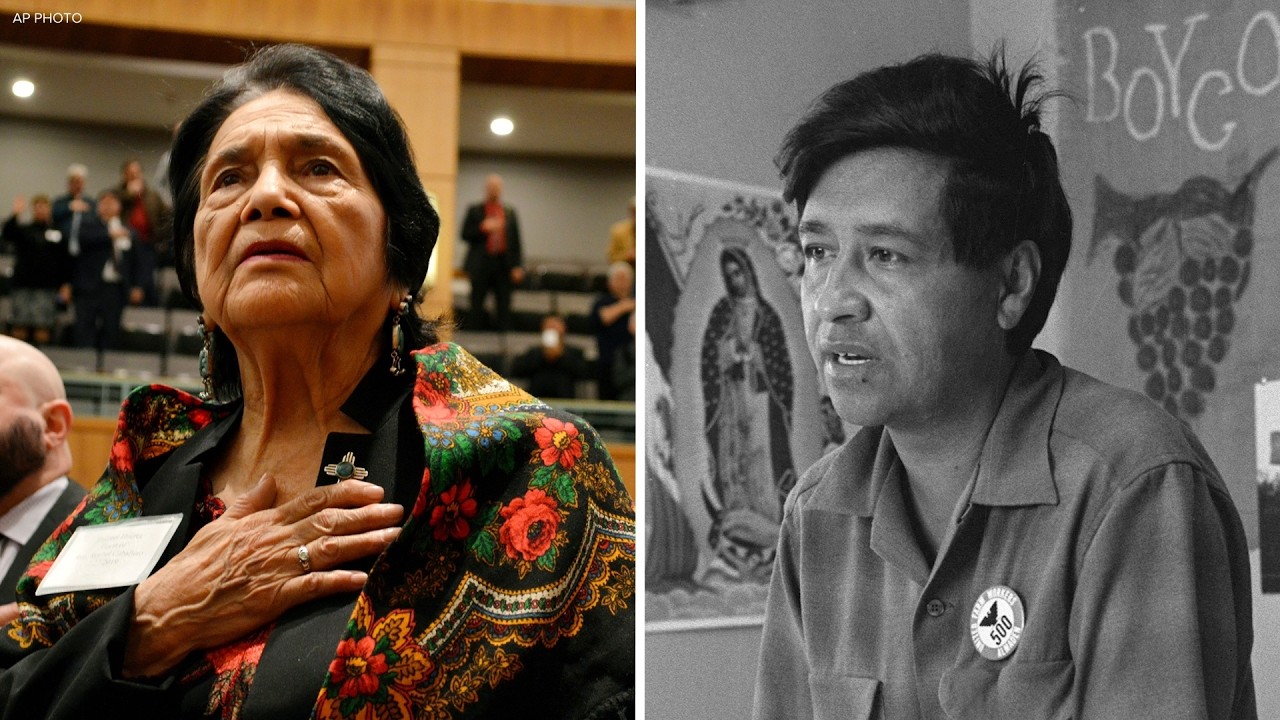
There is a name that belongs at the center of this reckoning. Not the name that became a holiday, not the face on the murals in East LA, not the subject of the biopic. The name that belongs at the center of the real story of American farmworker justice is Larry Itliong — a Filipino-American labor organizer from Pangasinan who arrived in the United States at 15 with nothing, built a movement with his hands, and was quietly written out of the story his movement created. Today, that changes.
The Delano Grape Strike of 1965 — the strike that created the United Farm Workers, that became a symbol of multiracial solidarity, that put Cesar Chavez on the cover of Time magazine — was not born from his vision. It was born from a Filipino walkout. It was born from the strategy, sacrifice, and organizing genius of Larry Itliong. As Huerta's disclosures force a long-overdue national reckoning with who Chavez really was, the Filipino-American community has been handed something rare: the truth, finally loud enough for everyone to hear.
September 8, 1965: The Day Filipinos Led
Larry Dulay Itliong was born on October 25, 1913, in San Nicolas, Pangasinan, Philippines. He arrived in the United States at age 15 with aspirations to study law. What he found instead was Depression-era America — and a Filipino labor diaspora already grinding through canneries in Alaska, fields in Washington, and grape vineyards in California's Central Valley. These were the Manongs: the first wave of Filipino men who came to America in the 1920s and 30s, denied citizenship, denied property rights, denied the right to marry outside their race, and channeled almost exclusively into agricultural and seasonal work.
Itliong became their voice. Through the 1930s and 40s, he organized strikes in asparagus fields near Stockton and fish canneries in Alaska. He was arrested. He was blacklisted. He kept going. By the early 1960s he was assistant director of the Agricultural Workers Organizing Committee (AWOC), an AFL-CIO affiliate, organizing Filipino and some Mexican farmworkers throughout California.
Then came September 8, 1965. On that day, Itliong called approximately 1,500 Filipino farmworkers to walk off the grape fields of Delano, California. They were demanding wages equal to the federal minimum — something growers had long refused. The strike was an act of enormous courage. These workers had no safety net, no citizen rights to fall back on, and no guarantee of success. What they had was Itliong, and each other.
— Larry Itliong
Within days, Itliong made a strategic calculation that would reshape American labor history. He approached Cesar Chavez, whose National Farm Workers Association (NFWA) represented primarily Mexican-American workers, and urged them to join the strike. On September 16 — Mexican Independence Day — the NFWA voted to join. The coalition became the United Farm Workers. The rest, as they say, is history. Except for this part: history largely forgot to say who started it.
What Huerta's Disclosures Mean for History
For decades, Filipino-American historians had been saying what the UFW's public mythology refused to acknowledge: the movement was built, in large part, on erasure. Chavez's carefully cultivated image — a Mexican-American Catholic labor saint, fasting and marching — translated powerfully to a mainstream American audience. Itliong did not fit that template. He was Filipino, Ilocano, plainspoken, and deeply skeptical of any leader who placed his own story above the movement. He wasn't trying to become a symbol. He was trying to win for his people.
By 1971, Itliong resigned from the UFW, citing the erosion of democratic structures and Chavez's tightening grip on the organization. His concerns, dismissed by many at the time, look prescient in the light of 2026. Philip Vera Cruz, another key Filipino UFW figure, followed in 1977 — in his case, over Chavez's refusal to condemn Ferdinand Marcos's dictatorship in the Philippines, a position that struck many Filipino members as a profound betrayal. Both men left because they saw something that others refused to see.
The 2026 reckoning is painful. But for the Filipino-American community, it also opens a door that has been locked for sixty years. The Delano Grape Strike had Filipino fingerprints all over its genesis. The Manong generation's contribution to American labor was not supplementary — it was foundational. That is the truth this moment gives us back.
Did You Know + Tagalog Word of the Day
Did You Know?
Larry Itliong, Cesar Chavez, and Dolores Huerta were once a united front. Itliong's Filipino-led AWOC launched the Delano walkout on September 8, 1965 — then Itliong personally approached Chavez and Huerta to bring their NFWA into the fight. When the two unions merged in 1966 to form the United Farm Workers, all three stood at its founding. Itliong served as UFW Assistant Director. For a brief, powerful moment, it was the most consequential multiethnic labor coalition in American history — built on a Filipino foundation.
Tagalog Word of the Day: Bayanihan
Pronunciation: ba-ya-NEE-han
Meaning: The spirit of communal unity, mutual aid, and collective action — working together toward a common goal.
Cultural Context: Bayanihan is exactly what Itliong practiced: bringing Filipino workers together, then extending that solidarity across ethnic lines to build a stronger movement. It is the oldest Pinoy value in the labor playbook.
Agbayani Village: Where He Put His Values Into Brick
After leaving the UFW, Itliong didn't disappear into bitterness. He poured his energy into Agbayani Village — a retirement community in Delano built specifically for the aging Filipino farmworkers who had given their health and years to the fields but had no family safety net in America, no pensions, often no citizenship. He fundraised. He organized. He made sure the men who had stood with him in 1965 had somewhere to live with dignity.
Agbayani Village still stands today. It is one of the most concrete expressions of Filipino-American community care in the 20th century — a physical monument to bayanihan, built by a man history nearly forgot. For anyone who has visited, it is impossible to walk those grounds without understanding that Itliong's legacy was never only about the strike. It was about taking care of his people, start to finish.
The Vallejo Connection: Why This Story Belongs to Us
Vallejo has always been a Filipino city in ways that exceed its statistics. The Manongs who worked the fields of Delano and Stockton were the same generation as the grandfathers and great-uncles of families across Solano County. Mare Island's naval shipyard brought waves of Filipino workers to this very city. The Filipino community in Vallejo — comprising nearly 7% of the city's population — is not an afterthought. It is a foundation.
For Hogan Spartans who graduated in the 80s and 90s, this history was largely absent from our textbooks. We learned about Cesar Chavez in social studies. We did not learn about Larry Itliong. That is a gap this generation — our generation — has both the responsibility and the tools to close. We can talk about it at family dinners. We can share it on social media. We can make sure our kids know the name.
"The 2026 news is a gut-punch, but it's also a liberation. Larry Itliong is finally being recognized as the architect — not as Chavez's sidekick."
— Hogan Spartans Alumni, Vallejo
Diaspora Voices: From the Bay to Dubai
The response to the 2026 revelations has been felt across the Filipino diaspora, not just in California. In San Francisco, cultural historians note that searches for Filipino labor history and Fil-Am identity have spiked sharply, with community institutions signaling intent to rename facilities and programs in honor of the full coalition of 1965 strikers. In Los Angeles, Filipino-American professional networks have begun circulating Itliong's story as a model of cross-ethnic coalition-building — a skill as relevant in boardrooms and law firms as it was in the grape fields.
Globally, the Itliong story resonates in a particular way with OFWs — overseas Filipino workers who understand, intimately, the experience of being an essential laborer in a country that is not entirely yours. In Dubai, in Saudi Arabia, in Singapore, Itliong's story is being read as a mirror: the invisible worker who refused to stay invisible, who organized not just for himself but for the generation coming behind him.
"Itliong embodies the modern OFW struggle — fighting for the invisible laborer. With the Chavez myth being challenged, attention finally returns to the workers themselves."
— Filipino community advocate, Dubai
The Strategic Blueprint: What Itliong Teaches Leaders Today
Larry Itliong was not just a labor organizer. He was a strategic genius operating with very few resources and very high stakes. Several of his core approaches are worth naming directly, because they are as useful today as they were in 1965.
He understood coalition power. Itliong knew that Filipino workers alone could not sustain a strike indefinitely — growers would simply bring in Mexican workers as replacements. The only way to win was to bring both communities together. He did not wait for that coalition to form naturally. He went and built it, personally, by walking into Cesar Chavez's office and making the case. This took ego discipline, strategic clarity, and genuine belief in solidarity over tribalism.
He valued democratic structure. One of the core reasons Itliong resigned from the UFW was his discomfort with Chavez's increasingly centralized leadership style. He believed unions had to be democratically accountable to their members — not platforms for a leader's personal vision. History has validated that instinct.
He built lasting infrastructure. Agbayani Village was not a publicity move. It was a recognition that a movement that doesn't care for its aging members has failed. Itliong's commitment to the Manongs in their final years is one of the most underappreciated dimensions of his legacy — and one of the most Filipino things about him.
What Comes Next: Reclaiming the Archive
There is real, urgent work to do. Schools need curriculum updates. Museums need to reframe their exhibits. Streets and public spaces should carry this name. The Filipino American National Historical Society (FANHS) has long advocated for this work, and the 2026 moment gives that advocacy new urgency and new audience.
But the most important archive is the one we hold in our families. If your Lolo or Lola worked the fields — in Delano, in Stockton, in the Sacramento Delta — their stories are part of this history. If your family came through Vallejo in the 70s or 80s, carrying nothing but work ethic and bayanihan, they are part of this lineage. PinoyBuilt is building that archive. We want your stories, your photos, your memories.
Did You Know?
Dolores Huerta and Cesar Chavez first connected in the late 1950s through the Community Service Organization (CSO), a Latino civic group where both were organizers. When the CSO refused to focus on farmworker issues, Chavez resigned in 1962 and founded the National Farm Workers Association (NFWA) — and Huerta followed, becoming his chief co-founder and negotiator. She was the strategist in the room, the one who drafted contracts and faced down growers directly. It was this organization — built by Chavez and Huerta together — that Larry Itliong approached in September 1965 and persuaded to join the Filipino-led strike. Without Itliong's outreach, there is no UFW. Without Huerta and Chavez's NFWA, the coalition doesn't hold. All three made it real.
Sources

Please comment below ↓


🙏🏽🙏🏽🙏🏽
ReplyDelete